

Contents · 8 sections+
A healthy, unclipped horse with a winter coat and shelter from the weather usually does not need a rug. For clipped, older, sick or very thin horses, things look different.
- Coat, clip, age and housing matter more than the temperature.
- The gram rating shows warmth, not quality.
- If in doubt: ask your vet.
The mornings are getting darker, the field is wet and the big question starts at the yard: rug on or rather not? If you want to look after your horse well, autumn quickly leaves you caught between rain showers, gut feeling and a shelf full of rugs with numbers like 0, 100 or 300.
Does your horse need a rug?
Rug or no rug?
There is no single temperature limit at which every horse needs a rug. For unclipped horses, a comfort zone of about 5 to 25 degrees is often quoted. What matters is several factors together.
A winter coat holds a warm layer of air. Clipped horses are usually rugged. Wet hair loses its insulating effect.
Older, thin or sick horses need more energy to stay warm and are more likely to benefit from a rug.
With a shelter, horses often manage without a rug. In a box, a rug that is too thick quickly gets too warm.
Types of rugs at a glance
Before you think about the fill, it is worth asking what the rug is meant for.
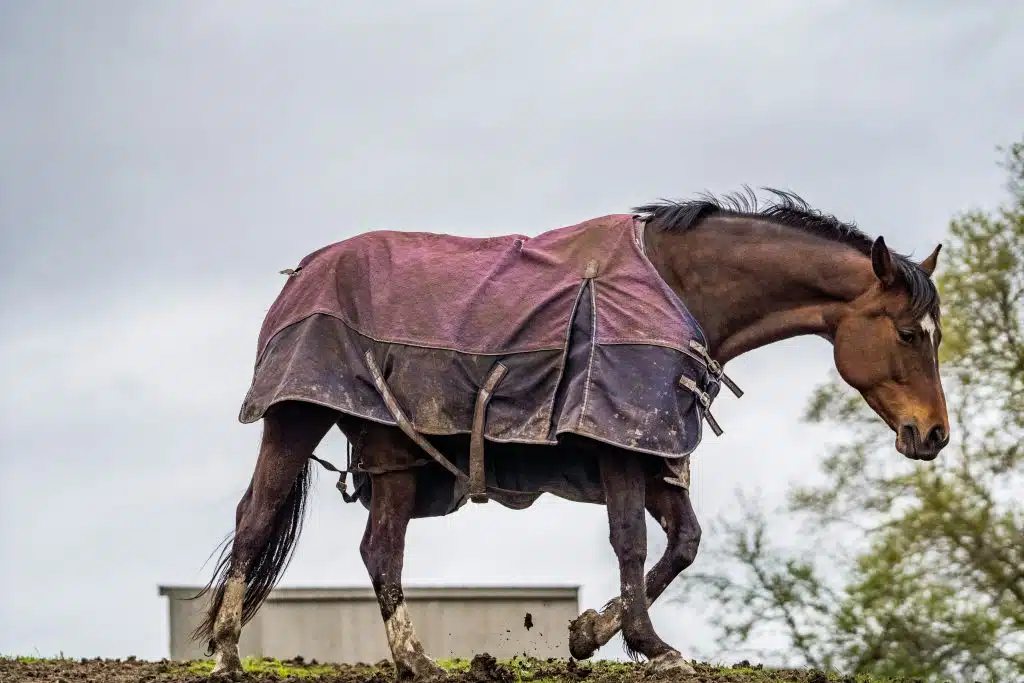
Waterproof and breathable, for field, paddock and open stable. From 0 g to heavyweight.
Soft, usually quilted, not for wet weather. Keeps your horse warm in the box or aisle.
Wicks moisture away until the coat is dry. A short-term help, not a rug for all day.
Fill in grams
The gram rating describes the amount of filling, in other words the warmth. It says nothing about quality: a good rug with 100 grams can feel warmer than a poorly made one with 200 grams.
Rain protection (0 g): Pure rain and wind protection without extra warmth.
Light (50 to 100 g): Light rug for the transition season.
Medium (150 to 250 g): Mediumweight rug, the flexible basis for many horses.
Heavy (300 g +): Heavyweight rug, especially for clipped horses in the cold.
Tip: Think in layers. A rug with medium fill as the basis, plus a fleece liner or a neck cover when needed. That way you can react flexibly to changes in the weather.
Fit: measuring correctly
A rug that does not fit is, in case of doubt, worse than none at all. It can press, slip and rub off hair.
- 1Stand your horse squareRelaxed and on level ground.
- 2Withers to tailTape measure along the spine, do not let it sag.
- 3Check the size chartEvery brand measures a little differently.
Washing, waterproofing, storing
A rug only lasts as long as it is cared for. This is how to do it at the end of the season:
- 1Brush outRemove coarse dirt, close the fastenings
- 2WashRead the care label, no fabric softener
- 3DryThoroughly, without a heater
- 4WaterproofSpray or wash-in
- 5StoreAiry, dry, mouse-proof
Legs in winter
When horses stand in the stable for longer, fluid can build up in their legs: the legs swell. As a first step, movement usually helps, for example walking in hand or turnout.
Compression bandages such as those from EquiCrown are often used as an addition. According to the provider, they cost around 99 to 120 euros. They are not a cure: if legs are injured or inflamed, clarify their use with your vet beforehand.
Buying horse equipment for less
Good rugs and bandages are a purchase for several years. Here are the three shops from this article in a direct comparison:
| Shop | Best for | Best deal | Get deal |
|---|---|---|---|
 Horseven Pferdedecken DE Horseven Pferdedecken DE | Horse rugs, more than 500 modelsFree shipping from €99 | −50 % | Get deal |
 EquiCrown EquiCrown | Compression bandagesNote the minimum order value | −5 % | Get deal |
 Horse Shop DE Horse Shop DE | Equestrian sports and accessoriesFree shipping from €99 | −70 % | Get deal |
You can find more horse shops in the overview of all shops.
Frequently asked questions
At what temperature should I rug my horse?+
There is no fixed limit. Coat, age, health, wind, rain and housing are what count, not the number of degrees alone. If in doubt, ask your vet.
How many grams of fill does a winter rug need?+
As a rule of thumb: 0 g for rain and wind, 50 to 100 g for the transition season, 150 to 250 g for mediumweight and from 300 g for heavyweight rugs. Clipped horses usually need more.
Does a horse in an open stable have to wear a rug?+
Not automatically. With shelter, wind protection and a winter coat, healthy unclipped horses usually manage without a rug. Without shelter or for old, thin or sick horses, a turnout rug can make sense.


I research every guide thoroughly, check manufacturer information and expert sources, and pick out the discounts that are really worth it. Every code is checked before it goes live.